






President's Message

Our Goal is to Advance Our Best Exploration Projects to Production, While Maintaining A Balanced Share Structure....

 
Bright Ideas!

Illuminate

District Scale Exploration!

Recent News

NewNews

Recent News

Conventions and Trade Shows

RecentEvents

Conventions and Trade Shows

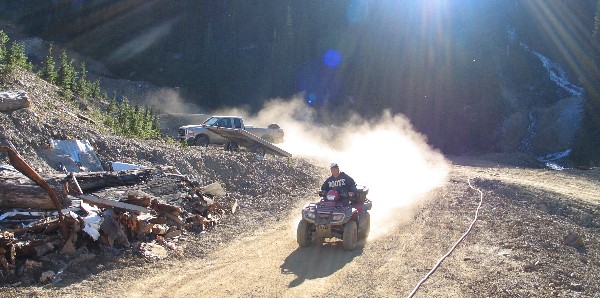
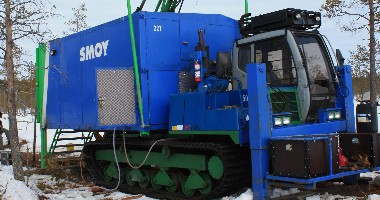
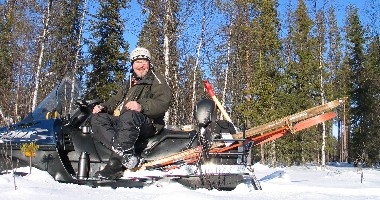
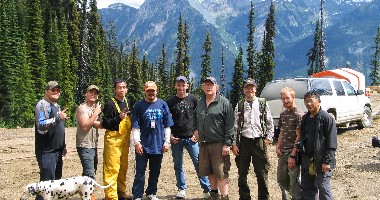
Why do we explore the "KCGB" in Finland - and how do we do it?

For those of you new to this website, I would like to take a little time to explain some of our unique business strategy. Taranis is a precious and base metal exploration company with a focus on Finland, where it has identified a "District-Scale" copper gold asset called the Kittilä Copper-Gold Belt ("KCGB"). Rarely does a junior mining exploration company have the opportunity to assemble a number of mineral deposits into a package like the KCGB, and this remains a top-priority of our company.

Despite "all-time-high" commodity prices, funding in the exploration sector remains challenging - Financings are being completed at record-low levels and pose serious challenges to exploration companies and their shareholders. The recognition, acquisition and exploration of large District-Scale properties such as the KCGB confront Taranis with a real dilemma - How do you create shareholder value - while undertaking a costly exploration endeavour such as this?

Taranis has tailored some creative solutions to the issue...

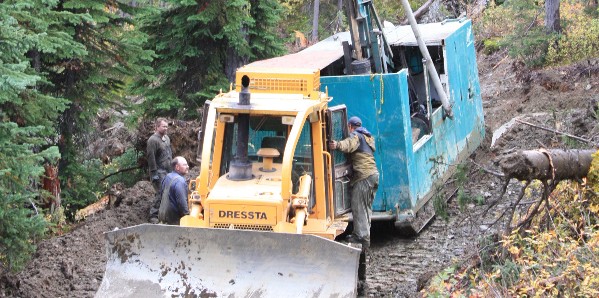
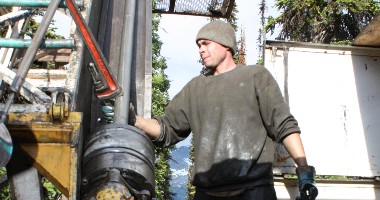
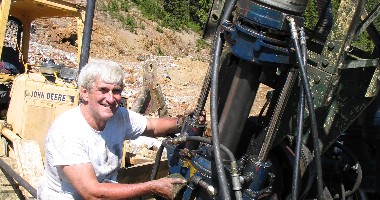
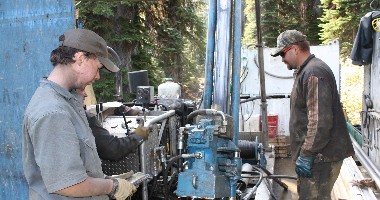
  • Most of our exploration and management is done "In-House". This means that exploration is done inexpensively, and by Management in the company.
  • Low overhead costs - take a look at how Taranis compares with other junior exploration companies. Our overhead costs are almost inconsequential, guaranteeing the shareholder that we put all of our your money into our exploration projects.
  • Strategic Partners - Be it legal issues, geophysics, or geochemistry - Taranis has developed strategic partnerships with other companies that are considered "the best in the business". This means that when work is done - it is done to the best standards, and by individuals or organizations that are considered among the best in the world.
  • 100% Ownership in properties - All of our exploration projects have been identified by Taranis and are owned 100% by the company. This maximizes shareholder value, but it also eliminates costly Option fees and Joint Venture costs that are common amongst other junior mining exploration companies.

How Do You Find an Ore Deposit and Reward the Shareholder?

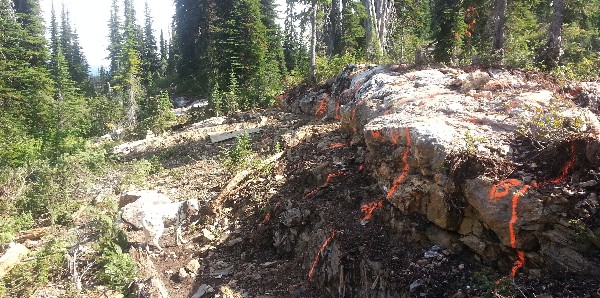
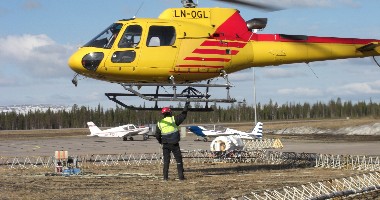
All of this means nothing if you don't have the ability to find an ore deposit! The days of prospectors roaming the tundra finding ore deposits are over, and most significant ore deposits have been discovered in areas that don't even have outcrop exposed. Increasingly, we are seeing the use of geophysics and geochemistry being used to try and find large deposits that are currently hidden. Taranis tries to use "Big Company" technology to find these deposits, and utilizes software and instruments that are state of the art to help find those deposits!

BUT - it doesn't stop here. Simply having all of these tools at your disposal, and a cost-effective method of exploring doesn't find ore deposits. You have to have the geological savvy to recognize the place to put all of these tools to work for you - and Taranis feels that this is the KCGB in Finland!

Why Have We Focused on Finland?

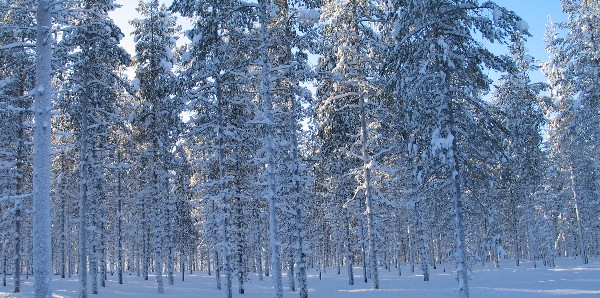
Finland represents one of the most exciting areas for gold exploration in Europe.  Finland's economic and political stability (it has been a member of the European Union since 2001, and outside of Germany it is the only country remaining in the EU with a AAA credit rating), long mining history and geologic terrain, and world-class Geological Survey ("GTK") make it stand out from the rest of the countries in Europe. Most important, is the tremendous exploration potential in Northern Finland that resembles the Timmins, Matheson and Val d'Or regions of Ontario and Quebec.  Not only does the geology bear a striking resemblance to its Canadian counterparts, but the terrain and the climate are also very similar.

Through our emphasis is on the KCGB, Taranis has assembled a group of exploration projects that cover over 100 km2 of some of the most favorable terrain in Finland for gold and copper deposits. Notwithstanding the Naakenavaara, Riikonkoski, Kettukuusikko, Mavrik and Nälkäjärvi- projects, we feel it has potential to host many more copper and gold deposits, and our exploration efforts have started to unlock some of the treasures in this newly recognized copper-gold district.

Thank You! 

Finally, I would like to thank all of our shareholders for the support and help you have given us!  If you are not a shareholder, we invite you to join us in our exciting quest - we know that you will enjoy the excitement of finding the next big ore deposit in Finland!


Welcome
Welcome
image1 image2 image3 image4 image5 image6

Gold

Gold is found in ores made up of rock with very small or microscopic particles of gold. This gold ore is often found together with quartz or sulfide minerals such as Fool's Gold, which is a pyrite. Gold's atomic number of 79 makes it one of the higher atomic number elements which occur naturally. Like all elements with atomic numbers larger than iron, gold is thought to have been formed from a supernova nucleosynthesis process.

Silver

Silver has been used for thousands of years for ornaments and utensils, for trade, and as the basis for many monetary systems. Its value as a precious metal was long considered second only to gold. The word "silver" appears in Anglo-Saxon in various spellings such as seolfor and siolfor. During World War II, the short supply of copper led to the substitution of silver in many industrial applications.

Copper

Copper has been in use at least 10,000 years, but more than 95% of all copper ever mined and smelted has been extracted since 1900. As with many natural resources, the total amount of copper on Earth is vast (around 1014 tons just in the top kilometer of Earth's crust, or about 5 million years worth at the current rate of extraction). However, only a tiny fraction of these reserves is economically viable, given present-day prices and technologies

Cobalt

Cobalt occurs in copper and nickel minerals and in combination with sulfur and arsenic in the sulfidic cobaltite (CoAsS), safflorite (CoAs2) and skutterudite (CoAs3) minerals. The mineral cattierite is similar to pyrite and occurs together with vaesite in the copper deposits of the Katanga Province. Cobalt is not found as a native metal but is mainly obtained as a by-product of nickel and copper mining activities.

Lead

Roman lead pipes often bore the insignia of Roman emperors. Lead plumbing in the Latin West may have been continued beyond the age of Theoderic the Great into the medieval period. Many Roman "pigs" (ingots) of lead figure in Derbyshire lead mining history and in the history of the industry in other English centers. The Romans also used lead in molten form to secure iron pins that held together large limestone blocks in buildings.

Zinc

Various isolated examples of the use of impure zinc in ancient times have been discovered. A possibly prehistoric statuette containing 87.5% zinc was found in a Dacian archaeological site in Transylvania (modern Romania). Ornaments made of alloys that contain 80–90% zinc with lead, iron, antimony, and other metals making up the remainder, have been found that are 2500 years old.

Welcome
themed object
We're Making BIG Things Happen in Finland!
Bookmark and Share
get in touch
back to top

These Websites have information that are interesting places to explore!

Geological Survey of Finland / Download Adobe Reader / Toronto Stock Exchange ("TMX") / Sedar / Kitco Metal Prices